
November 03, 2026 · Vitasonic Labs
Standing Core Work: Carries and Holds Beyond Crunches
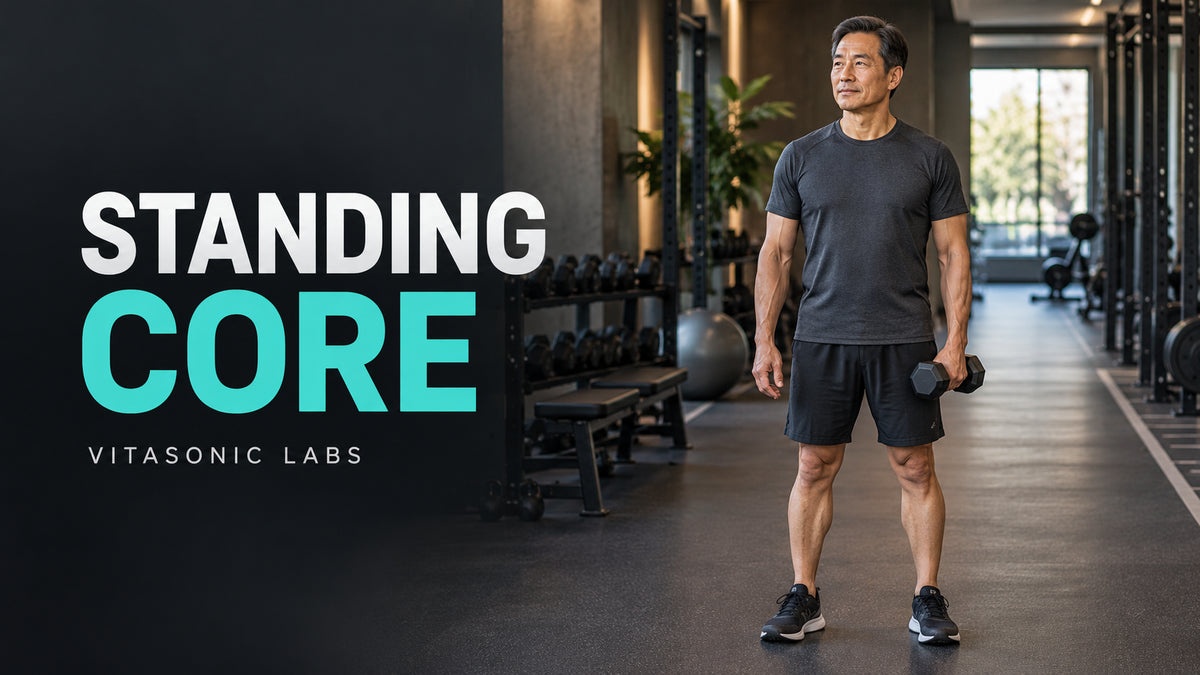
Does core training have to mean lying on a mat? Upright carries and holds offer another way to practice control. Instead of repeatedly bending your trunk, you work to keep your body steady while a load pulls on it. The useful challenge is maintaining position, not choosing the heaviest weight you can pick up.
Core-focused training ranks third in ACSM’s 2027 trend report, released October 20, 2026. That category includes several types of exercise. It does not prove that carries are best. This article focuses on a practical standing option within that broader interest.
What your trunk is doing
Your core includes muscles around the trunk, rather than just the visible muscles at the front of the abdomen. During a one-sided carry, the load tends to pull you toward one side. The practical challenge is maintaining an upright position while breathing normally and moving under control.
The ACE exercise library’s suitcase carry uses one dumbbell at the side while walking. ACE lists it as an intermediate exercise, so treat it as a skill to learn. It is not a first step for everyone, especially if carrying already causes pain or balance problems.
A standing hold provides an introduction to this position before adding the coordination required for walking. Choose a modest weight that you can pick up and put down safely. Keep the shoulders comfortable rather than shrugging hard. Avoid forcing a rigid pose or holding your breath to finish the time.
Set up the space first
Clear a short, flat path with enough room to turn. Move bags, pets and loose equipment out of the way. Wear stable shoes. Use a weight with a handle that fits your hand and a load that does not pull you off balance.
Practice picking it up and setting it down with control. If reaching to the floor is difficult, a trainer can help arrange a suitable raised start. Do not balance a weight on an unstable chair or reach awkwardly around other equipment.
Keep both sides of the workout comparable. The aim is not to prove that one hand can carry much more. If one side feels uncomfortable, reduce the challenge and ask for guidance instead of forcing a matched score.
Try a brief practice menu
This adjustable example suits someone already comfortable handling light weights. Warm up with an easy walk and a few unloaded movements. Stand with a light dumbbell at one side for ten to fifteen seconds. Set it down, rest and repeat on the other side. Stop sooner if your position changes.
If the holds feel steady, try a few slow steps along the clear path. Put the weight down before changing direction if turning is awkward. Keep your steps quiet and your shoulders level. Repeat only while you can breathe normally and maintain control.
A second option is a light two-handed carry with equal weights. It changes the challenge, so do not assume it is harder or better. A trainer can help you choose a variation. You can also stay with unloaded standing practice if weights are not suitable.
Progress through quality
Record the load, time or distance and how steady the movement felt. Once the same task becomes comfortable, consider a small increase in its duration or distance. Add weight later if you can keep the same posture and breathing. Change one variable at a time.
Carries can be tiring for the hands as well as the trunk. Leave room for the rest of your strength session, and avoid adding them simply because you feel you should do more. Numbness, sharp pain or an unstable grip means stopping.
Build the routine around regular meals and enough overall recovery. Vitasonic Labs Chocolate Whey Protein Isolate is an optional dietary protein source when convenience helps. It does not directly teach core control or replace practice. The NIH exercise supplement guide is useful background for deciding whether supplements serve a real need.
A successful session may look quiet: a modest load, a short path and no leaning. That is enough to learn from. Choose a version you can repeat comfortably rather than turning every carry into a test of endurance.