
October 10, 2026 · Vitasonic Labs
Pilates vs. Weightlifting: How to Fit Both Into Your Week
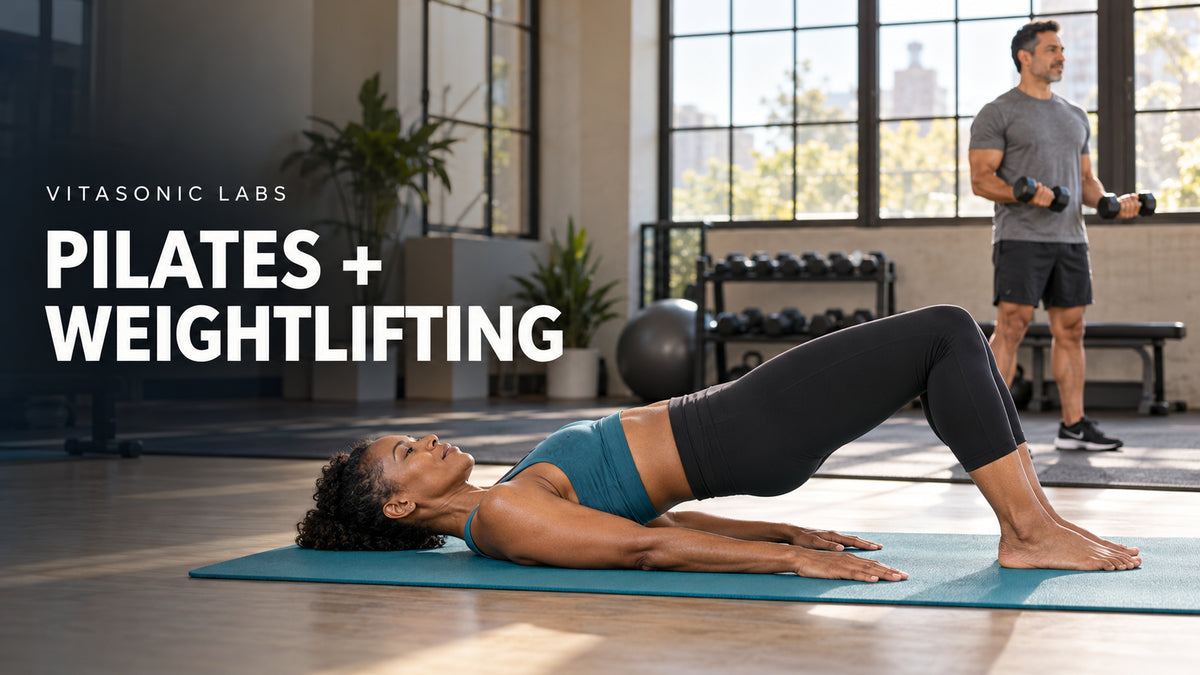
Pilates and weightlifting often appear on opposite sides of fitness debates. One is linked with controlled movement and core work. The other is linked with building muscle and lifting heavier loads. You can enjoy both without choosing a single workout identity.
The better question is what your routine needs. Your goals, time and starting skills can help you decide how much space to give each one.
Why Pilates is getting so much attention
ClassPass reported that Pilates was its most-booked workout for the third straight year in 2025. Total reservations rose 66%, while mat Pilates reservations rose 114%. These figures reflect ClassPass bookings, not every Pilates studio or home workout.
ACSM also places balance, flow and core strength among its top five fitness trends for 2026. Together, those reports show interest in controlled movement alongside more demanding gym sessions.
What is different about the workouts?
Pilates uses controlled exercises that often focus on posture, breathing and trunk control. Classes may use a mat or a reformer, a machine with springs that provide resistance. The challenge depends on the exercise, the setup and the way you perform it.
Weightlifting uses external loads, such as dumbbells, barbells or machines. It makes it easier to track and increase the load on a specific movement over time. That is useful when improving strength is a main goal.
Both workouts can feel difficult. A hard session, however, does not tell you exactly which skill or muscle group it trains.
Match the workout to your goal
If your main goal is to improve a squat, press or deadlift, regular practice with those movements matters. If you enjoy guided core work and careful movement, Pilates may help keep you engaged in your routine.
Pilates does not automatically replace a full strength program. Weightlifting also does not cover every balance or movement goal. Think about the work your week includes rather than the name printed on the class schedule.
A simple week with room for both
This example gives each workout space without filling every day:
- Monday: a full-body strength workout.
- Tuesday: an easy walk or rest.
- Wednesday: a beginner Pilates class.
- Thursday: rest or gentle movement.
- Friday: a second full-body strength workout.
- Weekend: enjoyable cardio, with time to recover.
Adjust the week based on how demanding your classes feel. A challenging reformer session may require more recovery than a short, gentle mat session. You can also start with fewer sessions and add more later.
How to choose your first class
Look for a beginner class with clear instruction. Tell the instructor about movements that bother you before the session starts. Good coaching should give you options instead of making you feel behind.
At home, begin with a short routine from a qualified instructor. Focus on understanding the movement before adding more reps or stronger resistance. A slower workout can still require close attention.
Keep nutrition simple
Meals and snacks should support your overall training week. You do not need a different supplement stack for every workout style.
If a protein shake fits your needs, compare Vitasonic Labs Whey Protein Isolate with Vitasonic Labs Plant Protein in Vanilla. Choose based on the ingredient list, allergies and food preferences. Neither is required to start Pilates or lifting.
The most useful combination is one you enjoy enough to repeat. Let each workout serve a clear purpose, then leave space for recovery and everyday life.