
November 01, 2026 · Vitasonic Labs
Incline Walking: Find Your Grade Without Copying a Viral Setting
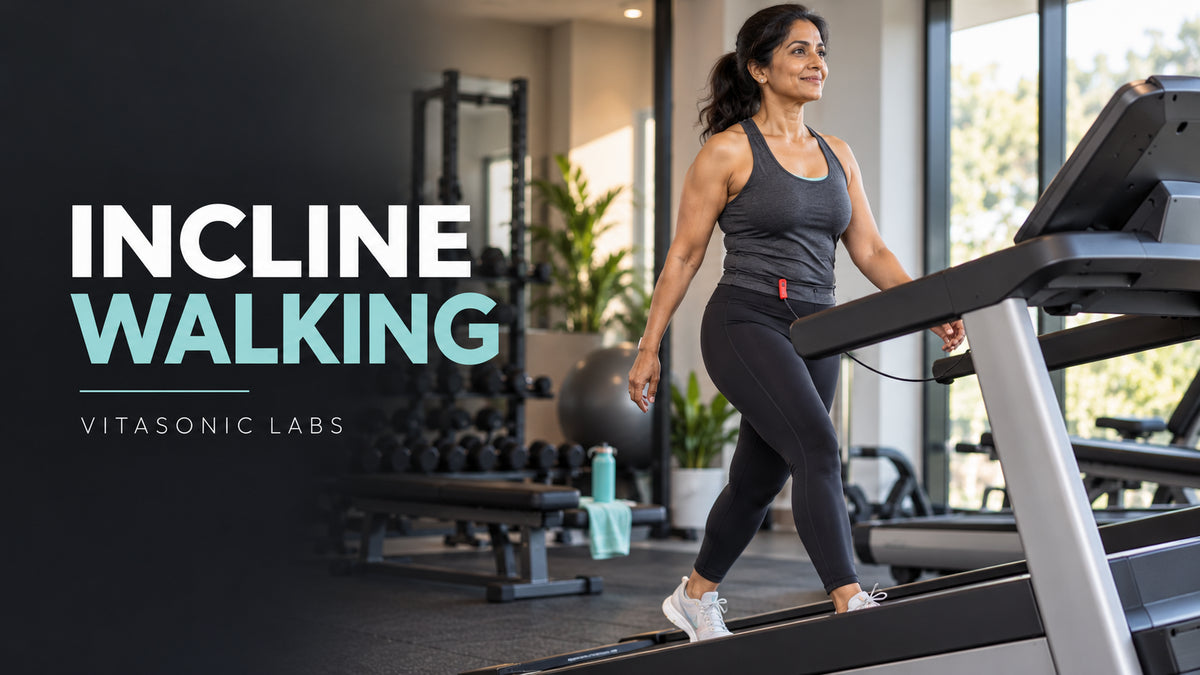
A treadmill setting can look simple online: choose a steep grade, hold a fixed speed and keep going. But the same numbers can feel easy for one person and far too demanding for another. Incline walking works best when you can adjust the machine around your own stride and effort.
The renewed focus on tailored exercise in ACSM’s October 2026 fitness trend report provides context for this practical approach. It does not prove a viral treadmill formula is better than other cardio. This is a fresh angle on an established walking option, rather than a newly discovered training method.
Understand what the number means
Incline is the treadmill’s uphill grade. It is not the same as speed, and a percentage grade is not an angle in degrees. Raising it makes the same walking speed a different task. Check the controls and units before starting, especially on an unfamiliar machine.
Begin on level ground at a comfortable pace. Attach the safety clip as the maker directs, and learn how to stop the belt. Step onto and off the machine using its instructions. Keep loose clothing, towels and cords away from moving parts.
Increase grade only while you can stay upright and walk with control. If you need to hang on the rails to maintain the setting, lower the speed or incline. The rails can help with brief balance support, but leaning on them changes the task you are trying to practice.
Use effort instead of a copied speed
The CDC guide to activity intensity explains the talk test: moderate effort generally allows talking but makes singing difficult. Use this as a rough guide, alongside how your legs and breathing feel. You can start below that effort while getting used to the machine.
A watch may offer another clue, but you do not need to chase a specific screen number. An incline that feels manageable today may feel harder after a poor night of sleep or a demanding leg session. Adjusting the workload is part of training.
Check your posture from time to time. Look ahead rather than down at your phone. Take steps that feel natural instead of reaching forward to keep up. If your stride becomes choppy or your calves feel strained, make the task easier.
Try a modest introduction
This example is for practice and can be shortened. Walk easily on level ground for five minutes. Add a small incline for one minute, then return to level walking for two minutes. Repeat that pair up to three times if it stays comfortable. Finish with a few easy minutes.
The aim is to compare how a small grade changes the walk. You do not need a steep setting to make the session count. If your treadmill uses large jumps between grades, stay level and use time or a small speed change instead.
Record the machine, speed, grade, time and effort. Repeat the same session before increasing it. Next time, you might extend one uphill section slightly. Keep speed and grade steady while testing that change. More incline and more speed at once can make it hard to judge what caused soreness.
Fit it into a real week
Incline walking is one cardio choice. It does not replace strength work, and it does not need to finish every gym visit. Give your legs time to adapt, especially if hills are new to you. Persistent foot, calf or joint pain is a reason to stop and get advice.
Have water available. For a short easy session, ordinary fluids and meals may cover your needs. For longer or sweaty training, Vitasonic Labs Hydration Powder is one optional electrolyte drink mix. Follow the current label; using a supplement does not make a harder setting appropriate.
The AAOS equipment guide recommends choosing equipment you can operate comfortably. Apply the same idea to your workout: pick settings you can control and a routine that fits the rest of your week.